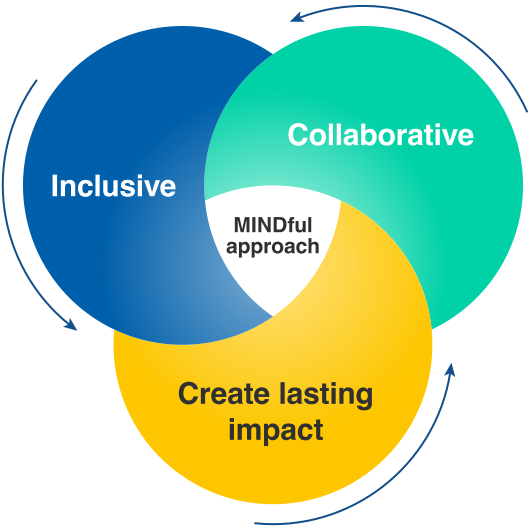
Create lasting impact
Being mindful of the impact of our actions and ensuring we create positive impacts that are lasting and continuous.

MIND evaluates the development impact opportunities and risks associated with each transaction to ensure alignment with Malaysia’s national development plan and while also meeting sustainability objectives. By identifying both potential benefits and challenges, the Bank fosters a balanced investment approach that increases the likelihood of achieving meaningful development impact, ultimately supporting Malaysia’s broader goals of economic growth, social equity and environmental stewardship.
Traditionally, financial institutions assess projects or companies based on its financial performance and indicators such as on credit risks and profitability.
Our sustainability approach is guided by three key principles which shall be reflected in all sustainability initiatives we pursue.
Bank Pembangunan’s MIND model, developed in collaboration with the World Bank Group, quantifies the impact of financial transactions through a structured framework of indicators. This quantifiable value is known as the MIND Score. The model captures key industry-specific impacts and outcomes, highlighting the unique contributions and challenges across sectors such as agriculture, energy, healthcare and education.
We assess positive outcomes, including economic growth, improved quality of life, and sustainability advancements. The model also identifies potential challenges, such as environmental degradation and social inequalities, ensuring a comprehensive understanding of both benefits and risks associated with each transaction.
A list of indicators has been developed to contribute to the 4 areas of impact, while also considering industry relevance.
Economic growth, improved quality of life and sustainability advancements.
Environmental degradation and social inequalities.
MIND serves a dual purpose: not only does it quantify Bank Pembangunan’s impact on national development, but it also drives progress in the Bank’s sustainability journey. The figures below illustrate the potential development impact of projects supported by Bank Pembangunan’s financing in 2024.
Transition project financed
Renewable energy to be generated
Road infrastructure under construction
Jobs to be created
Affordable housing units under development
Patients to be served
Our Sustainable Development Sukuk Framework reflects a commitment to boost investments aligned with ethical values and to promote sustainable, resilient and inclusive growth via capital markets. It is aligned with The United Nations Sustainable Development Goals (SDG) adopted by all UN members as part of the 2030 Agenda for Sustainable Development and with our Government’s focus on sustainability, digitalisation and technology.