
50 Years of Impact
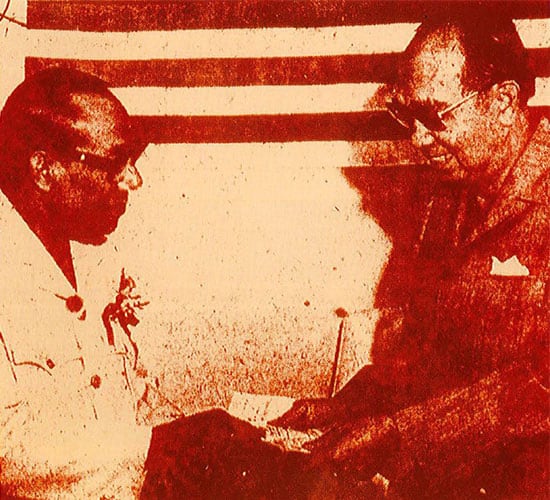
YAB Tun Haji Abdul Razak presenting the cheque for the Government’s first loan to YB Tun Dr. Syed Nasir Ismail (First Chairman of Bank Pembangunan Malaysia Berhad).
To Spur The Nation's Economic Growth
To address the shortfall in transforming Bumiputeras into entrepreneurs, the Government established Bank Pembangunan Malaysia Berhad on 28 November 1973 as a public limited company. The bank began operations on 8 June 1974 and was officially launched by Prime Minister YAB Tun Haji Abdul Razak bin Dato’ Hussein on 3 August 1974.
With an initial capital of RM1.5 million and 19 staff, Bank Pembangunan took on the challenge of boosting entrepreneurial activity in traditionally non-entrepreneurial communities. Its first loan of RM247,000 was approved for Haji Darus bin Haji Ibrahim, a sole proprietor, for a quarry project in Negeri Sembilan.
The Bank also enlisted the expertise of Mr. Hans Lesshafft, an experienced development banker seconded from West Germany under a Technical Cooperation Agreement, who served as Special Executive Assistant to the Chief Executive and General Manager.
Navigating National Development with a Single Purpose
The early years of Bank Pembangunan Malaysia Berhad (Bank Pembangunan) saw the Bank providing finance to key sectors including infrastructure development, manufacturing, and agriculture, as well as funding support to projects that contributed to the nation’s industrialisation and modernisation efforts. The Bank’s focus included long-term financing, fostering entrepreneurship, and driving economic development.
As the Malaysian economy progressed, Bank Pembangunan’s mandate also evolved to encompass a broader range of initiatives. Today, the Bank’s mandate includes a spectrum of capital-intensive industries and high-growth sectors including technology, maritime, infrastructure, and oil & gas; positioning the bank at the forefront of Malaysia’s high-growth sectors. With a resolute commitment to impact and national development, Bank Pembangunan remains steadfast in its commitment to empower businesses, foster innovation, and drive national progress.
1973 – 1990
To promote the development of Bumiputera entrepreneurs participation in the industrial sector.
1991 – 1998
To promote the development of Bumiputera entrepreneurs participation in the industrial and commercial sectors.
1999 – 2004
Focus on development of Bumiputera enterpreneurs, Small Medium Industry (SMI) and infrastructure sector.
2005 – 2009
To provide medium to long-term finance to the capital intensive industry – high technology, maritime and infrastructure.
2010
To provide medium to long-term finance to the capital intensive industry – technology, maritime and infrastructure.
2011 – Present
Present: To provide medium to long-term finance to the capital intensive industry-technology, maritime, infrastructure and oil & gas.
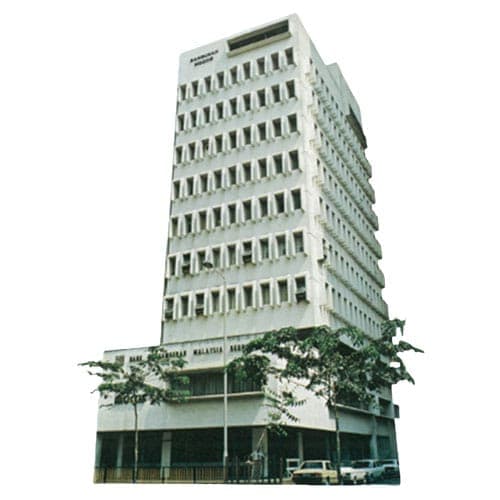
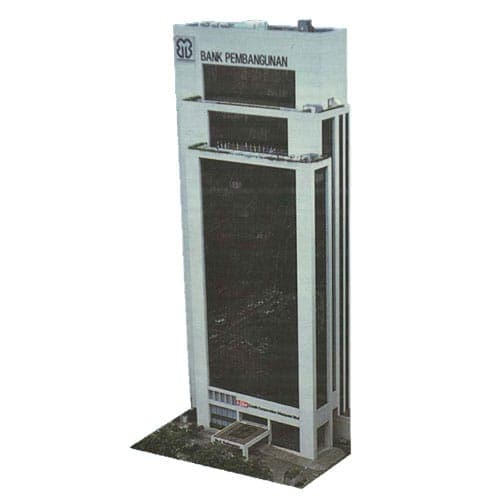
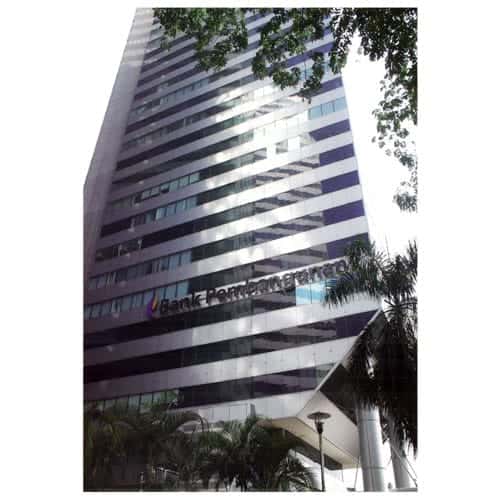

4 Buildings, 1 Vision
Our Home Over the Years
The journey of Bank Pembangunan Malaysia Berhad (Bank Pembangunan) can be represented by our growth via several office locations. Bank Pembangunan began operations from the modest MOCCIS Building in Jalan Melaka, and then moved to the bigger headquarters in Jalan Sultan Ismail (the current SME Bank) to help fulfil a larger Government mandate in the late 1980s.
Bank Pembangunan then shifted to our current headquarters, Menara Bank Pembangunan in Bandar Wawasan. This building was occupied by Bank Industri & Teknologi and thus holds a special connection to Bank Pembangunan. Each location throughout our 50-year journey has played a vital and historic role in the growth of Bank Pembangunan to what it is today.
Honouring Legacies
Chairpersons at Bank Pembangunan Over the Years
In its five-decade journey, Bank Pembangunan has been guided by exceptional leaders who have steered the bank towards excellence and success. We pay tribute to the remarkable individuals who have served as Chairperson of the Bank throughout the decades, as we reflect on the rich history of the Bank.
1974 - 1980
Tun Syed Nasir Ismail
1981 - 1993
Tan Sri Datuk Abdul Samad Idris
1994 - 1996
Tan Sri Dato' Hj.A. Hamid Hj.A. Rahman
Datuk Ahmad Zabri Ibrahim
1999 - 2000
Tan Sri Datuk Dr. Aris Othman
2001 - 2003
Datuk Mohamed Adnan Ali
2004 - 2007
Tan Sri Dato' Seri Dr. Hj. Zainul Ariff Hj. Hussain
2009 - 2010
Tan Sri Dr. Abdul Samad Hj Alias
2011
Dato' Mohammed Hj. Che Hussein
2012 - 2017
Tan Sri Dato' Sri Dr. Wan Abdul Aziz Wan Abdullah
2018 - 2021
Datuk Zaiton Mohd Hassan
2021 - 2023
Tan Sri Nazir Razak

1988 – 1995

1972 – 1987

1996 – 1998

1999 – 2004

2005 – 2007

2008 – 2011

2012- Current
Logo Evolution
Bank Pembangunan Malaysia Berhad’s logo transformation is a reflection of the changing mandate and strategic direction of the bank throughout the years, always maintaining the word “Pembangunan” to highlight our core mission of national development. The evolving logos mirror our commitment to creating impact and driving holistic national development and are a visual legacy of our foundational purpose to serve the nation.
The current logo is composed of two elements: the icon and the letters BPMB, which stand for Bank Pembangunan Malaysia Berhad. The icon’s graphic design is an artistic representation of the letter ‘P,’ symbolising ‘Pembangunan’ or development. It features two fluid vertical strokes in blue and yellow, conveying the concepts of uniqueness, niche, flexibility, and commitment in providing high-quality services and financial assistance. It also serves as a visual representation of the Bank’s evolution and growth over the years.